Full-Stack Web & Mobile Development (React, Node.js, Flutter)
Module 1 · Module 1 — Architecture of a multi-platform product · Lesson 1 of 1
Architecture of a multi-platform product
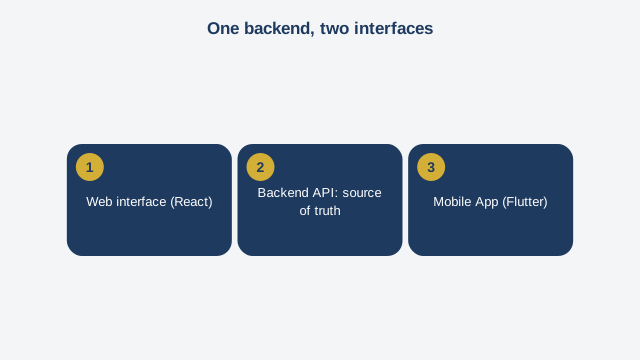
Welcome to this Full-Stack Web and Mobile Development course. Before writing a single line of code, you need to understand what you're actually building — and that means thinking like an architect before thinking like a developer. A modern multi-platform product is generally made of three distinct pieces that talk to each other. First, a web interface — the one users open in their browser, built here with React. Second, a mobile application, installed on the user's phone, built with Flutter. And finally, a backend: a server that centralizes data, enforces business rules, and answers requests from both interfaces. This backend exposes an API — an Application Programming Interface — a standardized set of entry points that both web and mobile use to read or write data. The value of this approach is simple: one backend, one database, one single source of truth. Change a pricing rule once, and both web and mobile benefit immediately. Compare that with an architecture where each platform duplicates its own logic — with the very real risk that the two versions eventually contradict each other. Take a concrete example: a marketplace, meaning a platform connecting sellers and buyers, similar to ones growing in Cape Town or Abidjan for local products. The backend manages accounts, products, orders and payments. The web interface lets sellers manage their catalog from a computer. The mobile app lets buyers browse products and order from their phone, even with limited internet connectivity. This separation demands discipline from day one: never place critical business logic only on the interface side. Final price calculation, stock availability checks, payment validation — all of this must live in the backend, never only in React or Flutter, or a curious user could bypass those rules by tampering with the client-side code. Before picking any tools, always sketch a simple diagram: what data exists, what actions each platform can trigger, and what API calls connect the two. Even a rough diagram like this will save you weeks of rework later. That is exactly what you'll produce in the exercise that follows.
Free preview, no account needed — the rest of this module and the following modules unlock after enrolling.
Convinced? Enroll to unlock the full course.
See pricing